

Showing posts with label Australian native plants. Show all posts
Showing posts with label Australian native plants. Show all posts
Tuesday, 8 December 2009
Amusing nursery find
Found at the nursery, side by side. Clearly I have a very primitive sense of humour...


Monday, 4 May 2009
Nude and native gardening
On Saturday, May 2nd, it was 'World Naked Gardening Day'. I missed it. It would have been good weather for gardening in the nuddy in these parts, but somehow I don't think my family or neighbours would have appreciated it. They have 'days' for everything these days!
However, I was in a garden. I visited the Royal Botanic Gardens, Cranbourne. I'd never been there before and I was seriously impressed. We visited their Australian Garden, which features a variety of examples of native Australian gardens, as well as examples of plants from all different native habitats. I really liked their visual representation of different native gardens and how much water they need: 6 big red watering cans for a low-water garden, 10 yellow watering cans for a moderately watered garden and 14 cans for a water intensive native garden. One of the highlights was getting to see the Sturt Dessert Pea in bloom:

Photo courtesy of RGB Australian Garden blog
However, I was in a garden. I visited the Royal Botanic Gardens, Cranbourne. I'd never been there before and I was seriously impressed. We visited their Australian Garden, which features a variety of examples of native Australian gardens, as well as examples of plants from all different native habitats. I really liked their visual representation of different native gardens and how much water they need: 6 big red watering cans for a low-water garden, 10 yellow watering cans for a moderately watered garden and 14 cans for a water intensive native garden. One of the highlights was getting to see the Sturt Dessert Pea in bloom:

Photo courtesy of RGB Australian Garden blog
They have a display creek bed there as well, with a section where you are invited to take your shoes off and go for a paddle. There was a father there with his two young boys, and one of them was in awe: "Are you sure we're allowed to play in the water, dad?". A sign of the times: playing in water is such a rare and special treat these days.
Monday, 2 March 2009
Veg about... in the hot weather
Last year I shared with you my flourishing herb garden as a part of Bellgirl's Veg About. I'd just thought I'd like to update you on how my herbs are going during all of this crazy hot weather...
I had started pushing the native mint back a wee bit to make way for some kangaroo paws and correas, but then it just died right back all by itself in the heat. It has almost all died, in fact. Even though it looks really feral, cutting it back will prompt it to start growing again, and then die again in the next heat wave.


We lost our oregano, but the parsley and thyme survived, although is looking a little spindly. Our regular mint pot is looking fine though, although a bit burnt at the bottom.

Herb pot before...

...and after! Uh oh! Oh well, it'll grow back.

However, there are two plants that didn't bat an eyelid during this weather (although not veggies):
The ptilotus spathulatus, a perennial shrub native to Melbourne's western planes, and the asterolasia phebalioides, a rare native found in highly exposed, rocky/swampy areas of the Grampians. I bought another one and decided to see how it would go in the ground rather than potted. In fact, these plants thrived in the 40+ weather. I bought a second ptilotus (my first one is in a pot, see below) and royally cocked up planting it: I completely mashed the roots and it didn't get much watering, and two days after planting it was when the real heat wave hit. It dropped a few leaves, but then bounced right back within days. In a pot or in the ground, this plant is indestructible.


My two awesome indestructible plants!
I had started pushing the native mint back a wee bit to make way for some kangaroo paws and correas, but then it just died right back all by itself in the heat. It has almost all died, in fact. Even though it looks really feral, cutting it back will prompt it to start growing again, and then die again in the next heat wave.

Native mint before...

...native mint after
We lost our oregano, but the parsley and thyme survived, although is looking a little spindly. Our regular mint pot is looking fine though, although a bit burnt at the bottom.

Herb pot before...

...and after! Uh oh! Oh well, it'll grow back.

Regular mint, looking happy as ever.
The ptilotus spathulatus, a perennial shrub native to Melbourne's western planes, and the asterolasia phebalioides, a rare native found in highly exposed, rocky/swampy areas of the Grampians. I bought another one and decided to see how it would go in the ground rather than potted. In fact, these plants thrived in the 40+ weather. I bought a second ptilotus (my first one is in a pot, see below) and royally cocked up planting it: I completely mashed the roots and it didn't get much watering, and two days after planting it was when the real heat wave hit. It dropped a few leaves, but then bounced right back within days. In a pot or in the ground, this plant is indestructible.


My two awesome indestructible plants!
Wednesday, 19 November 2008
Curse of the periwinkle
This is a bit of a work in progress in the garden at the moment. We're trying to clear the backyard of blue periwinkle. Blue periwinkle, like the innocent looking and very popular arum lily, is a noxious weed in these parts and notorious for seriously choking up the local waterways. It just sort of arrived in the backyard and proceeded to take over. Probably about 1/4 of the whole garden is covered with the stuff - and it's not a big backyard.
 From the top
 From the bottom
I really should have taken a before photo, but I got so into ripping it out that it totally slipped my mind, so just imagine that all of that dirt area was covered with blue periwinkle. It's a pain to clear because it grows in tight nodes and you have to rip out the roots or the fragments just grow back.
We have a few ferns leading down to the backyard (the property is on a hill) and we thought it would be totally awesome to have bracken (Pteridium esculentum) growing in the more dry parts of the backyard, to keep the continuity in the backyard and because it's indigenous. Although I have no idea where to get bracken - you can't just buy it because it grows from spores and doesn't take so well to transplantation. And strangely enough, many people think it's a weed (mostly stemming from farmers' dislike of it because it makes their cattle ill) so there are many websites on the struggles on how to remove it (once the spores are settled, it's hard to remove), but not how to get actually some in your backyard.
Failing on the bracken idea, we might just trawl the list of indigenous plants supplied at Kuranga and see what we can buy.
 From the top
 From the bottom
I really should have taken a before photo, but I got so into ripping it out that it totally slipped my mind, so just imagine that all of that dirt area was covered with blue periwinkle. It's a pain to clear because it grows in tight nodes and you have to rip out the roots or the fragments just grow back.
"Spreads locally mainly by stems that root at nodes. Seed is apparently rarely produced in Australia. Long distance dispersal occurs via stem fragments and crowns dispersed as garden waste or by water."But we're slowly getting there. It's all down the side of the house as well. Our very ambitious Grand Ultimate Plan is for the plants in our garden to be indigenous, or at least native. It's amazing how quickly extra birds and pretty butterflies come through the backyard just by adding a few more local plants. There are a few remnant patches nearby and there are local parks and waterways, maintained by local environmental groups, that we're getting some inspiration from.
We have a few ferns leading down to the backyard (the property is on a hill) and we thought it would be totally awesome to have bracken (Pteridium esculentum) growing in the more dry parts of the backyard, to keep the continuity in the backyard and because it's indigenous. Although I have no idea where to get bracken - you can't just buy it because it grows from spores and doesn't take so well to transplantation. And strangely enough, many people think it's a weed (mostly stemming from farmers' dislike of it because it makes their cattle ill) so there are many websites on the struggles on how to remove it (once the spores are settled, it's hard to remove), but not how to get actually some in your backyard.
Failing on the bracken idea, we might just trawl the list of indigenous plants supplied at Kuranga and see what we can buy.
Monday, 17 November 2008
This is... my favourite thing from nature
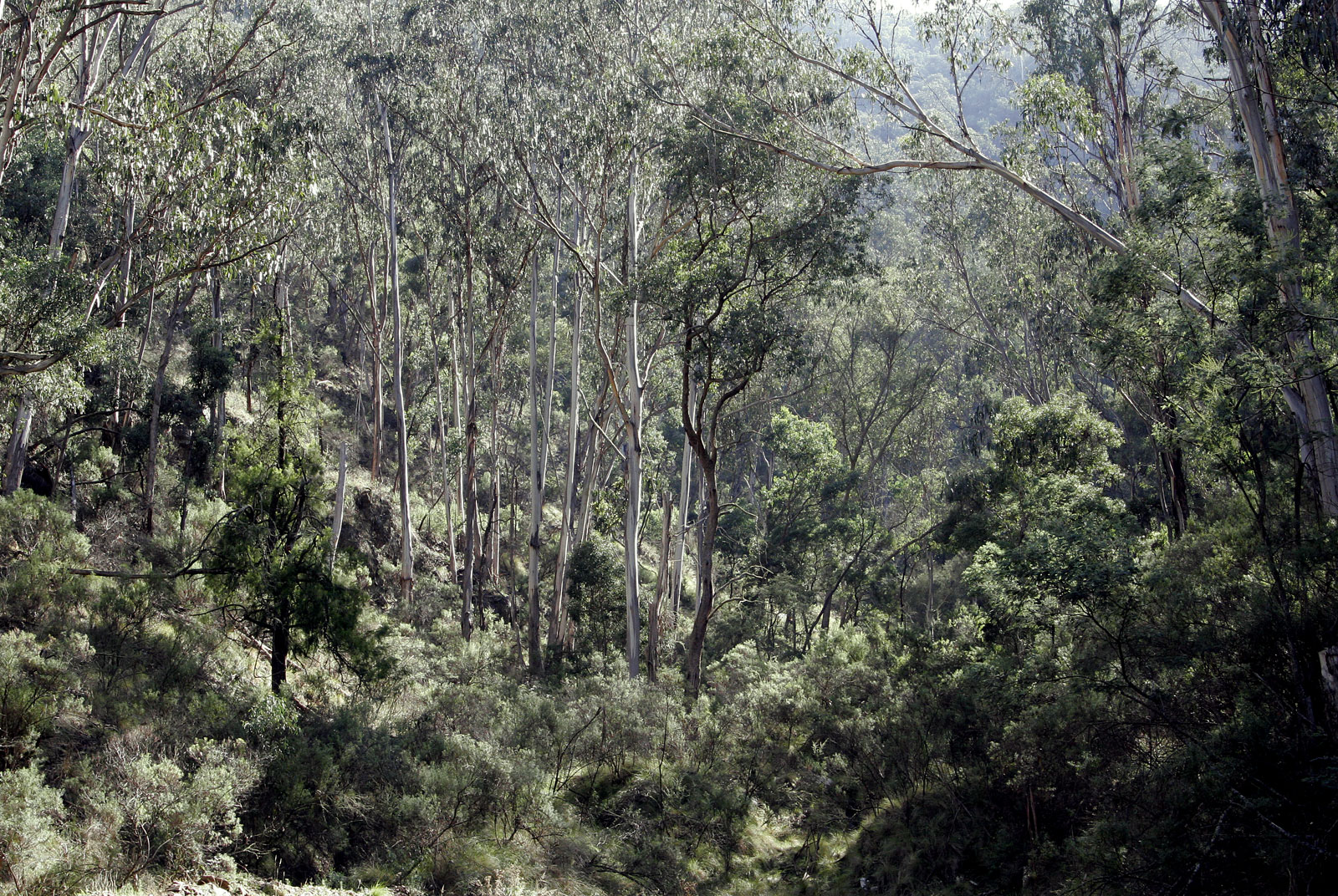
Even though I put forward the topic this week, I actually had no idea what my favourite thing from nature was! However, after much thought, I realised that my interest was very broad and could only be reduced to this: Australian bushland.
There are the muted greens, the dryness of it all, the variation in shapes in the foliage. Then there are the coastal bushes too, with their fat, furry leaves. When I was young, I never ever tired of long family car trips with miles of dried grasses and eucalpyts. As I got older and learned a little bit about native plant physiology (it always comes down to physiology and "how stuff works" for me), the bushland that I had loved as a kid suddenly had a new level of awesomeness. Like learning how the odd features of coastal plants, like their furriness, help them to survive. Or why eucalypts suddenly sprout leaves from their trunk after fire - and look pretty silly - was because of a fascinating process called coppicing, where buds under the surface of the trunk suddenly sprout to compensate for the leaves lost in fire. Actually, all of the eucalpytus' adaptations are pretty cool. It's combined beauty and function makes it a never ending source of fascination for me.
Thanks to Three Buttons for letting me choose this week's theme, and for hosting This is!
Thanks to Three Buttons for letting me choose this week's theme, and for hosting This is!
Monday, 27 October 2008
Tasmania Part 2: Animals, bugs and plants
I'm not so sure if this is the most sensible way to present my holiday photos to you, but I'm rolling with it anyway. After Launceston, we picked up my parents and spent 5 days in the south of the state and took a look around Hobart, Port Arthur, Ida Bay, South-West National Park and Bruny Island.
Edit: for some reason blogger photo uploader/flickr is doing something dodgy with my photos so they're a little off-centre, and I can't work out why. You can view the originals here.
In this post I'll show a few of the smaller-scale things (as in, shrub size or smaller) we saw and save the big stuff for my next post. That is a selection of interesting animals, bugs and plants we saw. I don't have any idea about what species any of these things are - except perhaps the echidna - but if you know and want to tell me, please do! We just thought they looked cool. I've mentioned that I love bugs, and we spotted many of those while we were away.
Bumble bees; Bagdad. These things a freaking huge!

Pretty pink flowers; Devil's Kitchen

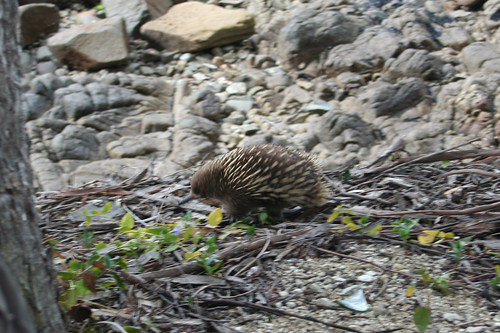
Echidna; Port Arthur

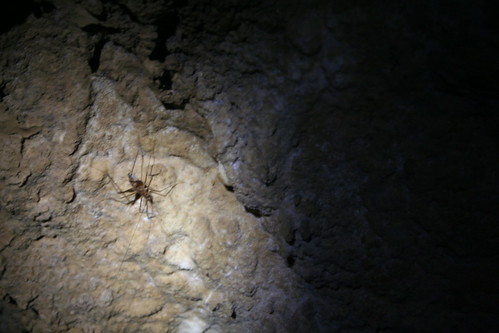
Cave cricket; Hastings Caves

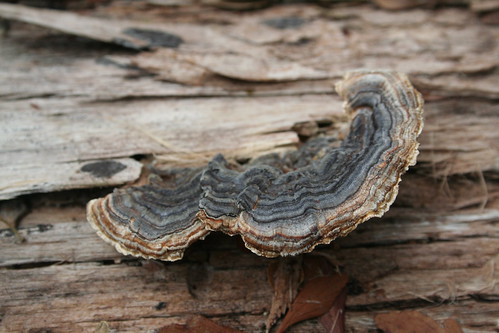
Fungi; Southwest National Park

Lichen; Creepy Crawly walk (highly recommend!), Southwest National Park

Amazing moss covered tree; Creepy Crawly walk, Southwest National Park

Pretty red flower; Southwest National park

Banksias etc; Bruny Island Lighthouse

One of the numerous beetles of this variety we saw crawling all over Bruny Island Lighthouse

A pea that I know as "egg and bacon"; Fluted Cape walk, Bruny Island

Orchid; Fluted Cape walk, Bruny Island

A purple/blue flower we saw everywhere; Fluted Cape walk, Bruny Island

White wallaby (long way back, a bit of a dodgy shot); Fluted Cape walk, Bruny Island

Caterpillar pretending to be a stem; Old Mill trail, Bruny Island

Edit: for some reason blogger photo uploader/flickr is doing something dodgy with my photos so they're a little off-centre, and I can't work out why. You can view the originals here.
In this post I'll show a few of the smaller-scale things (as in, shrub size or smaller) we saw and save the big stuff for my next post. That is a selection of interesting animals, bugs and plants we saw. I don't have any idea about what species any of these things are - except perhaps the echidna - but if you know and want to tell me, please do! We just thought they looked cool. I've mentioned that I love bugs, and we spotted many of those while we were away.
Bumble bees; Bagdad. These things a freaking huge!

Pretty pink flowers; Devil's Kitchen

Echidna; Port Arthur
Cave cricket; Hastings Caves
Fungi; Southwest National Park
Lichen; Creepy Crawly walk (highly recommend!), Southwest National Park

Amazing moss covered tree; Creepy Crawly walk, Southwest National Park

Pretty red flower; Southwest National park
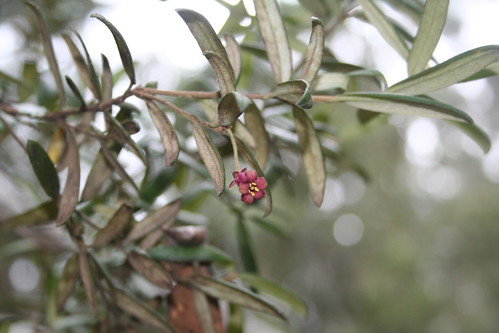
Banksias etc; Bruny Island Lighthouse

One of the numerous beetles of this variety we saw crawling all over Bruny Island Lighthouse

A pea that I know as "egg and bacon"; Fluted Cape walk, Bruny Island
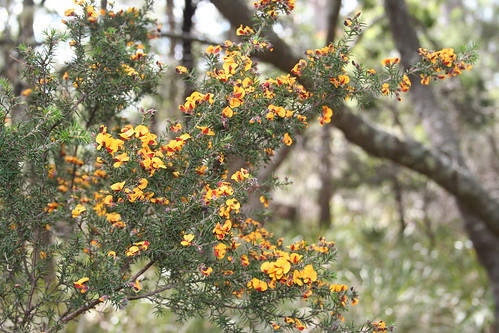
Orchid; Fluted Cape walk, Bruny Island

A purple/blue flower we saw everywhere; Fluted Cape walk, Bruny Island

White wallaby (long way back, a bit of a dodgy shot); Fluted Cape walk, Bruny Island

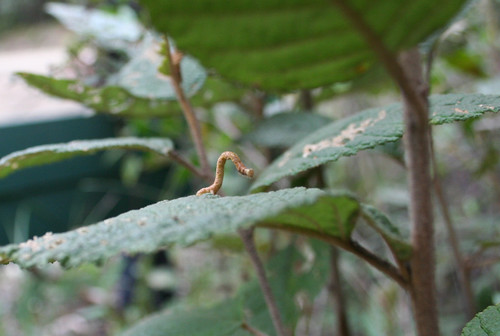
Caterpillar pretending to be a stem; Old Mill trail, Bruny Island
Sunday, 28 September 2008
This is: Show off time!
What an exciting topic for this week! I had been looking out my parents' kitchen window, admiring our garden in all of its spring glory and thought, how can I not boast about this?! A few years ago my parents gave Gib and I full reign over the garden, so I'm pretty stoked with the results. Although some of them, as you'll see below, are the result of the lady who owned the house many decades ago. I've only included some photos - there were many more plants looking very pretty, but I've decided to hold out for just a few more weeks so they are looking even more impressive -- and so I don't use up all of my useful post material (not that I have much trouble with that, it's more a matter of finding time, of late!). I should mention that this garden is not a high maintenance garden and only has plants that can look after themselves with very minimal watering (we have water tanks, but it's more a case of remembering to water!)
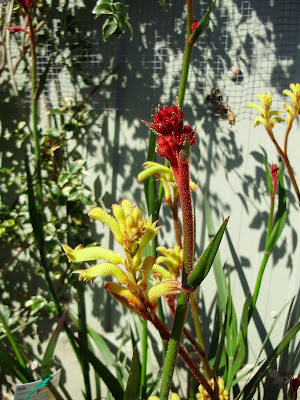
We have some lovely kangaroo paws that are growing in some sandy soil, westward facing. The yellow and red ones are absolutely thriving, so much so that they are almost falling over from the weight of the flowers. We also a planted a black kangaroo paw species, Macropidia fuliginosa, which hasn't taken off as well as the others (it's a fussy one) however the photo of that one didn't come out so well.

I've blogged before about the plight of my poor Downy Star Bush (it's still alive!), however we've had much more success with another Asterolasia cousin, however I can't remember exactly which species this one is. The flowers, leaves and way the plant grows are virtually the same, except that the leaves aren't quite as furry. I love the cute little pale yellow flowers, so sweet.

This is a bulb that randomly popped up in our front yard. I don't know what it is. The woman who owned our house back in the 70s used to have a magnificent garden full of bulbs. So occasionally we'll have stuff like this just come up. Sucha pretty purple.

Here are some gorgeous fresias. I love their bright pink colour! So happy. About 10 years ago they came up, randomly, like the one above, and they have been flowering annually ever since. We have trained my dad not to mow over them now.

Many times Gib has planted boronias and they have died. This is the first one we've managed to keep alive... and have flower! It's in partial shade, eastward facing, in poor quality soil and is regularly leaned on by Monty the Cat.

This Monty. In a pot. A rare species. Prefers full sun and does not like to be watered.

Thanks to Katie at May the Cloth Be With You for choosing this week's theme, and to Handmaiden who is doing a lovely job filling in for Three Buttons while she's a way.
We have some lovely kangaroo paws that are growing in some sandy soil, westward facing. The yellow and red ones are absolutely thriving, so much so that they are almost falling over from the weight of the flowers. We also a planted a black kangaroo paw species, Macropidia fuliginosa, which hasn't taken off as well as the others (it's a fussy one) however the photo of that one didn't come out so well.


I've blogged before about the plight of my poor Downy Star Bush (it's still alive!), however we've had much more success with another Asterolasia cousin, however I can't remember exactly which species this one is. The flowers, leaves and way the plant grows are virtually the same, except that the leaves aren't quite as furry. I love the cute little pale yellow flowers, so sweet.

This is a bulb that randomly popped up in our front yard. I don't know what it is. The woman who owned our house back in the 70s used to have a magnificent garden full of bulbs. So occasionally we'll have stuff like this just come up. Sucha pretty purple.

Here are some gorgeous fresias. I love their bright pink colour! So happy. About 10 years ago they came up, randomly, like the one above, and they have been flowering annually ever since. We have trained my dad not to mow over them now.

Many times Gib has planted boronias and they have died. This is the first one we've managed to keep alive... and have flower! It's in partial shade, eastward facing, in poor quality soil and is regularly leaned on by Monty the Cat.

This Monty. In a pot. A rare species. Prefers full sun and does not like to be watered.

Thanks to Katie at May the Cloth Be With You for choosing this week's theme, and to Handmaiden who is doing a lovely job filling in for Three Buttons while she's a way.
Tuesday, 29 July 2008
A weekend adventure to The Grampians
Friday morning Gib and I jumped into the car and headed off, filled up the petrol tank and ended up... in The Grampians National Park. It's about 3.5 hours drive from Melbourne - or closer to 4 hours if you forget to take the ring road and end up in Werribee instead (both driver and navigator got distracted by an interesting discussion on Triple J). It's a favourite destination for both Gib and I, although we've never holidayed there together before. We stayed in the National Park camp grounds because they're dirt cheap - you get drop toilets and no showers, but we were only intending to stay overnight anyway... but it ended up being two nights. We slept in the back of the station wagon: a convenient, portable "tent". Amazingly, the weather was perfectly cold and sunny the whole time we were there. After all the hiking we did, we were quick to leap into the shower when we got home.
 The view out the back of our "tent". There were plenty of kangaroos in the vegetation.
We were a little unprepared: We had gin, tonic water and even limes, but no cups. Cups would have also been useful for the tinned soup we brought. A few extra bottles of water wouldn't have gone astray either, but we managed to make some good camping improvisations by getting water from waterfalls and boiling it for ages. We made pancakes out of tonic water. Perhaps an extra pair of warm pants wouldn't have gone astray either as it was extraordinarily cold at night.
Day one: McKenzie Falls and Briggs Bluff
We stayed at Smith's Mill camp ground, which is stones throw to the McKenzie falls. We sat in the car park having the classic camping breakfast: bite the middle out of a piece of bread and crack an egg into the middle and fry it up til it's all golden on the outside and gooey on the inside, but we had a hard time fending off a family of 12 carrawongs. We were down at the falls nice and early, about 8am, but still by 8:30 there was a crowd of tourists coming down. The McKenzie falls are far more impressive in winter than summer.
 Breakfast at McKenzie falls
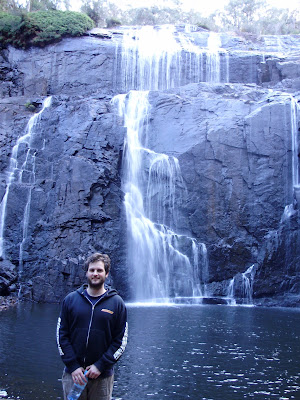 Gib at McKenzie falls
The Briggs Bluff walk was fantastic. It was about 4 hours return (estimated 3.5, but we took a wrong turn). While the view from the top wasn't nearly as breathtaking as other climbs, the walk itself was stunning. The terrain was so varied on the way to the top, starting with Beehive Falls, through forest, large boulders and sandstone, and other parts were open, rocky and swampy.
We were astounded at the number of carnivorous plants we found. Until a few months ago we hardly knew anything about carnivorous plants. Then after going to just a couple of the Victorian Carnivorous Plant Society meetings for advice on our plants, we learned that there were more than just Venus fly traps and your standard pitcher plants. Just by sitting in on meeting we absorbed information about the local, native species, and while we were in the Grampians we were able to spot them everywhere. It's amazing what's right under your nose without even knowing. I'm sure I've seen these plants a thousand times and thought they were just another moss or something.

 Various carnivorous plants on the way to the top of Brigg's bluff
On the way to the Grampians we had joked about whether we'd see any Asterolasia phebalioides, the endangered plant that I picked up and have struggled to keep. l specimens, about a metre tall, with light green fluffy leaves, looking much happier than mine. I have wanted to see them growing so I can get a better idea on how to better manage my one at home. They're only found in a few pockets around Australia, and only in a handful of places in the Grampians. On the way up to the bluff we saw other Asterolasia but not the A phebalioides, but then to my absolute astonishment I found one on the way back. Beautiful, about a metre tall with thick light green leaves, looking much healthier than my one. Then we started spotting them all over the place in an area about 2/3 of the way to the top of the bluff. Coincidentally we'd found the best spot for them. Apparently the area surrounding Beehive Falls is home to the largest population.
 A healthier specimin of Asterolasia phebalioides
Day two: Mount Stapylton
My favourite walk in the Grampians, up until now, has been Mount Hollow. I think that has now been surpassed by the walk up Mt Stapylton. The entire way along the walk is totally amazing: there are beautiful, sheer rock faces and stunning views the whole way. It's easy to navigate and the first part is a flat surface but quite steep, and then it sweeps down to an easy forest track. You walk past the Taipan Walls which are spectacular orange cliffs, through more shrubbery and then climb up some rocks to the first ledge. I was thinking at this point that it wasn't so bad, what are all of the reviews talking about when they say that people never make it to the top? It's at this is the point in the track where the yellow markers end and the red markers begin.
The red section of the track isn't so much physically challenging (it's definitely tougher but there are plenty of knobbly rocky hand holds) but it's a test of your mind. We took the red arrow to the left, which leads you across a couple of very precarious ledges. The first was about a foot wide and then you have to climb up through a narrow hole onto another rather precarious ledge which is a bit less than a foot wide and much more exposed. My toes are going numb just writing about it now. There's a nice flat rock face angling back that you can cling to for your life and eventually you reach a rocky outcrop with some rock pools. I don't particularly like heights, but this was the first time I've felt physically ill from heights. I think I could have coped better if there wasn't so much wind. I looked up and there was one short, final scramble to the top. It was steep and even more exposed. The hair raising experience on the previous ledges had totally done my head in and I just could not bring myself to do the last bit. I sat admiring the stunning view in a tight ball of petrified mess, wondering how on earth I'd make it down. Gib leaped like a mountain goat to the top, took videos and everything (bastard). He tells me that the ledges were much harder and that the last section is quite easy: just climb up through some nobbly rocks and you're there.
Will I do it again? Absolutely!
 The track leading to Mt Stapylton peak. The orange cliffs are the Taipan walls, a popular place for rock climbing.
 Me, freaking out, not far from the final ledge near the peak. The narrow path below me is about 2 meters wide at that point. The trees behind me are a couple of hundred meters below me (refer to picture above - you can see where the line of trees are below the shelf that I'm on).
 The view out the back of our "tent". There were plenty of kangaroos in the vegetation.
Day one: McKenzie Falls and Briggs Bluff
We stayed at Smith's Mill camp ground, which is stones throw to the McKenzie falls. We sat in the car park having the classic camping breakfast: bite the middle out of a piece of bread and crack an egg into the middle and fry it up til it's all golden on the outside and gooey on the inside, but we had a hard time fending off a family of 12 carrawongs. We were down at the falls nice and early, about 8am, but still by 8:30 there was a crowd of tourists coming down. The McKenzie falls are far more impressive in winter than summer.
 Breakfast at McKenzie falls
 Gib at McKenzie falls
We were astounded at the number of carnivorous plants we found. Until a few months ago we hardly knew anything about carnivorous plants. Then after going to just a couple of the Victorian Carnivorous Plant Society meetings for advice on our plants, we learned that there were more than just Venus fly traps and your standard pitcher plants. Just by sitting in on meeting we absorbed information about the local, native species, and while we were in the Grampians we were able to spot them everywhere. It's amazing what's right under your nose without even knowing. I'm sure I've seen these plants a thousand times and thought they were just another moss or something.

 Various carnivorous plants on the way to the top of Brigg's bluff
On the way to the Grampians we had joked about whether we'd see any Asterolasia phebalioides, the endangered plant that I picked up and have struggled to keep. l specimens, about a metre tall, with light green fluffy leaves, looking much happier than mine. I have wanted to see them growing so I can get a better idea on how to better manage my one at home. They're only found in a few pockets around Australia, and only in a handful of places in the Grampians. On the way up to the bluff we saw other Asterolasia but not the A phebalioides, but then to my absolute astonishment I found one on the way back. Beautiful, about a metre tall with thick light green leaves, looking much healthier than my one. Then we started spotting them all over the place in an area about 2/3 of the way to the top of the bluff. Coincidentally we'd found the best spot for them. Apparently the area surrounding Beehive Falls is home to the largest population.
 A healthier specimin of Asterolasia phebalioides
Day two: Mount Stapylton
My favourite walk in the Grampians, up until now, has been Mount Hollow. I think that has now been surpassed by the walk up Mt Stapylton. The entire way along the walk is totally amazing: there are beautiful, sheer rock faces and stunning views the whole way. It's easy to navigate and the first part is a flat surface but quite steep, and then it sweeps down to an easy forest track. You walk past the Taipan Walls which are spectacular orange cliffs, through more shrubbery and then climb up some rocks to the first ledge. I was thinking at this point that it wasn't so bad, what are all of the reviews talking about when they say that people never make it to the top? It's at this is the point in the track where the yellow markers end and the red markers begin.
Will I do it again? Absolutely!
 The track leading to Mt Stapylton peak. The orange cliffs are the Taipan walls, a popular place for rock climbing.
 Me, freaking out, not far from the final ledge near the peak. The narrow path below me is about 2 meters wide at that point. The trees behind me are a couple of hundred meters below me (refer to picture above - you can see where the line of trees are below the shelf that I'm on).
Friday, 18 July 2008
My Downy Starbush (Asterolasia phebalioides)
About a year ago I was visiting Kuranga Nursery when I found this curious shrub going out for cheaps. It stood about 30cm high, had small, green furry leaves (I love anything with furry leaves) and it had a little handwritten tag saying: Asterolasia phebalioides. Kuranga have a great information centre, so I went and ask the attendant there. They pulled out a big, thick book, and it had just one small entry which read:
That's all.
It sounded like a handful, but I was so taken with its little furry leaves I decided to take it home... for just $3.
I asked a native plant forum for tips, but they only had as much information as Kuranga. Google didn't have much either, but I found out that it is listed as "vulnerable" and "rare" and is found in just a handful of places: the Grampians National Park, Little Dessert National Park and Kangaroo Island (where it is listed as endangered), and is under threat from salinity. In this document I found out slightly more information:
 Perhaps not the most beautiful specimen ever. This poor thing does struggle!
I have it currently growing in a pot, with some coarse rocks in the bottom, then some smaller rocks, and finally filled in with a combination of sand and potting mix. I occasionally water it, but try to ignore it as much as possible as I am conscious of root rot. The pot is in part shade and gets mostly afternoon sun. It hasn't grown much since we got it, and the leaves go a very (alarmingly?) dark green colour in summer, but it seems to be starting to put a few new shoots at the moment. It seems to be a bit of a slow grower. After my cat, Monty, sat on it (what on earth is it with cats and pots?!), it has a bit of a lean and now has a stake to keep all cats off. It has flowered regularly in the past year, which is a good sign I think. It produces these adorable little bright yellow star shaped flowers, so I am pleased.
I am scared though. Looking after this plant is, for me, is like looking after a fragile alien. There isn't much information out there, and less about how to look after one in your backyard. I would love to find someone else who has one because I really have no idea what to do with it and I am scared to death of killing it!
I would love to learn how to propagate this thing because I think it is one of the coolest looking plants ever. I would love to have more of them!

List of resources:
I have just received an email from Kuranga. Looks like we'll need to relocate it. Here is there advice:
"Not easy to maintain. Needs perfect drainage. May be best grown in a rockery"
That's all.
It sounded like a handful, but I was so taken with its little furry leaves I decided to take it home... for just $3.
I asked a native plant forum for tips, but they only had as much information as Kuranga. Google didn't have much either, but I found out that it is listed as "vulnerable" and "rare" and is found in just a handful of places: the Grampians National Park, Little Dessert National Park and Kangaroo Island (where it is listed as endangered), and is under threat from salinity. In this document I found out slightly more information:
How I currently keep it:
Species Characteristics: Small slender shrub to 1.5 m high; branchlets densely grey-tomentose with silvery and ferruginous hairs. Leaves densely crowded, lacking obvious petioles, broadly cuneate, less than 1 cm long, densely stellate-tomentose. Inflorescence terminal with subsessile solitary flowers; calyx minute; petals 8-10 mm long, golden yellow. (Armstrong & Telford, 1986).
Habitat: The species grows on sandy, acidic soils derived from sandstone. In the Grampians the species occurs as part of dense heathy shrub layers between 1 and 1.5 m high, with sparse canopies of trees such as Oyster Bay Cypress-pine (Callitris rhomboidea) and Brown Stringybark (E. baxteri) (Overton et al., 1990).
Life History: The species appears to be long-lived, and is an early coloniser following fire and soil disturbance by humans and native mammals (Overton et al., 1990). Sexual reproduction, and subsequent establishment from seeds. The species is an obligate seed regenerator; nearly all plants are killed by fire, and regeneration is solely from seed stored in the canopy or in the soil for a short time pre-fire. It tolerates occasional major disturbance and requires such disturbance for the rare opportunity to establish and spread (VRFAF).
 Perhaps not the most beautiful specimen ever. This poor thing does struggle!
I have it currently growing in a pot, with some coarse rocks in the bottom, then some smaller rocks, and finally filled in with a combination of sand and potting mix. I occasionally water it, but try to ignore it as much as possible as I am conscious of root rot. The pot is in part shade and gets mostly afternoon sun. It hasn't grown much since we got it, and the leaves go a very (alarmingly?) dark green colour in summer, but it seems to be starting to put a few new shoots at the moment. It seems to be a bit of a slow grower. After my cat, Monty, sat on it (what on earth is it with cats and pots?!), it has a bit of a lean and now has a stake to keep all cats off. It has flowered regularly in the past year, which is a good sign I think. It produces these adorable little bright yellow star shaped flowers, so I am pleased.
I am scared though. Looking after this plant is, for me, is like looking after a fragile alien. There isn't much information out there, and less about how to look after one in your backyard. I would love to find someone else who has one because I really have no idea what to do with it and I am scared to death of killing it!
I would love to learn how to propagate this thing because I think it is one of the coolest looking plants ever. I would love to have more of them!

List of resources:
- Department of Primary Industries statement
- Distribution of Asterolasia phebalioides
- Department of Agriculture, Fisheries and Forestry's report
- South Australia's Department of Environment and Heritage fact sheet
- Australian Native Plants
I have just received an email from Kuranga. Looks like we'll need to relocate it. Here is there advice:
I have sourced some information from Elliot and Jones Australia plant encyclopedia and they recommend that Asterolasia phebalioides is grown in a very well drained light-medium soil. Growing plants in pots creates a very different root environment and it is recommended with most plants in pots that you use a good quality potting mix. If you are using soil or sand and rocks/pebbles in the base in a pot you often find that rather than draining better it actually compacts the root zone more. This may be causing the plant to be a little slow to establish. Elliot and Jones also recommend that you grow this plant in dappled shade or partial sun so definitely protection from afternoon sun. They mention that it should be alright in full sun as long as the root system is well protected, which in a pot it may not be best. I hope this is of some help to you in growing you Asterolasia.
Monday, 3 March 2008
What a weekend!
Sassy apron arrival!
My Sassy Apron arrived last Friday! I was absolutely delighted and it came at the best time for me as I did end up having to say goodbye to my little furry friend. I was so excited. Fiona, who created my apron, was kind enough to add some fat quarters in with the apron too! I love the apron: the fabric is so happy and the pocket is nice and deep. I only have a photo of the apron, but not what it looks like on yet. I need to find someone to take the photo! The pumpkin soup recipe she included was used for the remaining half of the pumpkin that my friend gave me the other day.

In the garden...
Saturday I introduced my mother to Kuranga Native Plant Nursery in York st, Mt Evelyn. We came home with about many plants, so Sunday afternoon was spent in the sunshine planting them. Most of the plants we bought are found along a nearby creek and nature reserve, so not only are they native to the area but should survive well in our garden:
Pomaderris prunifolia
Olearia glandulosa
Pomaderris aspera
Goodenia ovata
Bauera rubioides

Our garden is either sand or clay, and our front garden is in a lot of shade thanks to a rather large camphor laurel (a horrid weed in Australia, but my dad is quite attached to it). This one was kind of cute, coloquially known as "pussy tails", and it grows in Melbourne's western plains. I think I'll grow up in a pot. I love feeling the flowers... they're so furry! I'm really developing a thing for furry plants.

The Bauera rubioides grows dainty little pink flowers and is said to be quite a robust little plant, so that one will be planted in memory of Mobius.

Great op shop find!
On the way to Kuranga Nursery we found this great little op shop in Heathmont, of all places. I've just been introducing Gib to the joys of op shopping and after this expedition he is totally sold on them! I was astounded that I found a black tshirt that fitted me there. I'm 4'11" and can't ever find clothes in regular shops, but miraculously I have more luck in op shops. I also found this fantastic, horridly kitch picture which I know my friend Kat will adore! The colours are absolutely wonderful. I'm catching up with her on Saturday, but it's taking all my strength not to just blab to her about it now. I want to keep it as a surprise (because aren't surprises fun?!).

My Sassy Apron arrived last Friday! I was absolutely delighted and it came at the best time for me as I did end up having to say goodbye to my little furry friend. I was so excited. Fiona, who created my apron, was kind enough to add some fat quarters in with the apron too! I love the apron: the fabric is so happy and the pocket is nice and deep. I only have a photo of the apron, but not what it looks like on yet. I need to find someone to take the photo! The pumpkin soup recipe she included was used for the remaining half of the pumpkin that my friend gave me the other day.

In the garden...
Saturday I introduced my mother to Kuranga Native Plant Nursery in York st, Mt Evelyn. We came home with about many plants, so Sunday afternoon was spent in the sunshine planting them. Most of the plants we bought are found along a nearby creek and nature reserve, so not only are they native to the area but should survive well in our garden:
Pomaderris prunifolia
Olearia glandulosa
Pomaderris aspera
Goodenia ovata
Bauera rubioides

Gib and my mother, with the Kuranga cafe in the background (they do they BEST coffee and food!)
Our garden is either sand or clay, and our front garden is in a lot of shade thanks to a rather large camphor laurel (a horrid weed in Australia, but my dad is quite attached to it). This one was kind of cute, coloquially known as "pussy tails", and it grows in Melbourne's western plains. I think I'll grow up in a pot. I love feeling the flowers... they're so furry! I'm really developing a thing for furry plants.

The Bauera rubioides grows dainty little pink flowers and is said to be quite a robust little plant, so that one will be planted in memory of Mobius.

Great op shop find!
On the way to Kuranga Nursery we found this great little op shop in Heathmont, of all places. I've just been introducing Gib to the joys of op shopping and after this expedition he is totally sold on them! I was astounded that I found a black tshirt that fitted me there. I'm 4'11" and can't ever find clothes in regular shops, but miraculously I have more luck in op shops. I also found this fantastic, horridly kitch picture which I know my friend Kat will adore! The colours are absolutely wonderful. I'm catching up with her on Saturday, but it's taking all my strength not to just blab to her about it now. I want to keep it as a surprise (because aren't surprises fun?!).

Subscribe to:
Posts (Atom)


